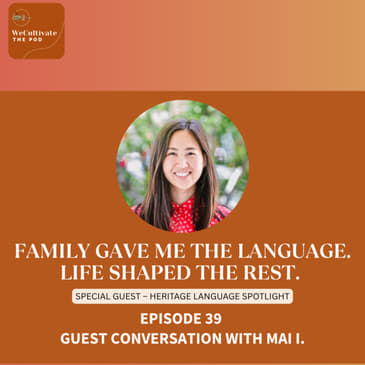



In this episode, Michelle sits down with her longtime friend Mai for a conversation on heritage language, multilingual identity, and the realities of growing up between cultures as Japanese American women. Together, they reflect on the invisible layers people often miss when discussing language: family dynamics, migration, race, class assumptions, belonging, humor, personality, and the pressure to adapt across environments. Mai shares stories from her upbringing in California and Colorado, navigating Japanese in both family and professional contexts, and the challenges of moving between cultural expectations throughout different stages of life.
The conversation also explores language learning beyond the classroom, code-switching across disciplines and social spaces, assumptions placed on Asian Americans in elite academic environments, and the growing role of AI in education and communication.
This episode is part of WeCultivate’s ongoing heritage language spotlight series and broader exploration of multilingual communication in real life.
Main Topics / Themes
Heritage language, identity, and belonging
Growing up between cultures as Japanese/Asian American women
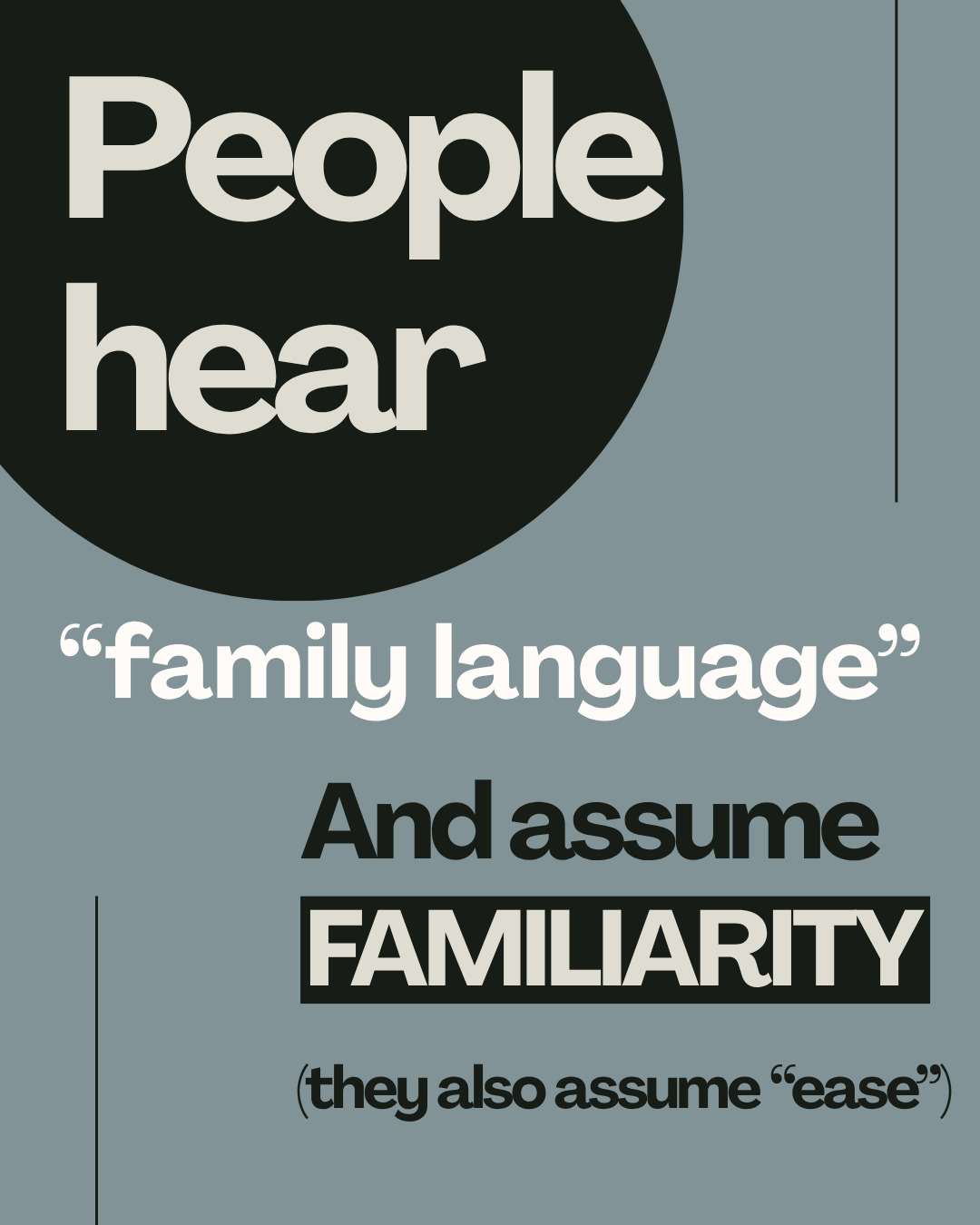
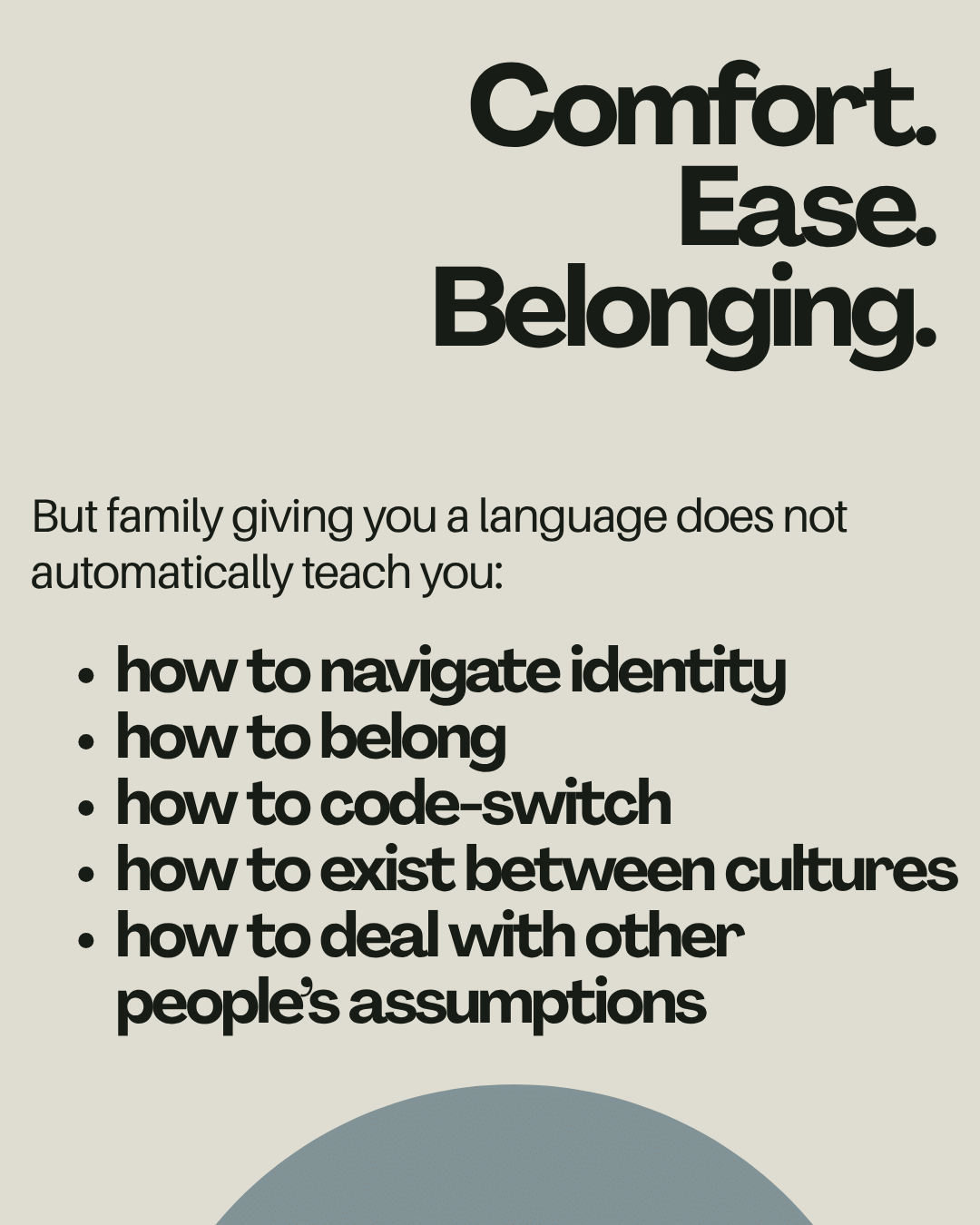
Language beyond fluency: communication, behavior, and adaptation
Race, class, and assumptions in education and professional spaces
Language learning, AI, and the future of communication
Related Resources & Recommendations from Mai
Below, you'll find a few links tied to the topics we discuss in this episode, all provided by our guest. WeCultivate does not unequivocally endorse the material or its creators beyond a cursory review of the material presented. They have been shared here on behalf of our guest to encourage further exploration and independent learning. This is a dynamic list and subject to updates as time goes on. If any of the links become broken, or if you have a suggestion for the list, please let us know. Thanks!
Inspiring media that connected me to Japanese language and culture
This topic did not explicitly come up in the podcast, but Ghibli films shaped my views and values as a young child. Beyond language learning, they seeded my personal and professional pursuits in environmentalism, as well as taught me the importance of community, compassion, women leaders, and transient relationships.
Favorites include:
Whisper of the Heart
My Neighbor Totoro
Kiki's Delivery Service
Princess Mononoke
Nausicaä of the Valley of the Wind
The Secret World of Arrietty
Organizations that engage in advocacy and diplomacy
The Japanese American Citizens League (JACL is the oldest Asian American civil rights organization in the U.S. JACL advocates issues to benefit the progress of Japanese Americans and Asian Americans in combating prejudice and bigotry. Also provides scholarships, which I benefited from.)
U.S.-Japan Council (USJC) (Nonprofit focused on bilateral relations and people-to-people exchange, including the Emerging Leaders Program for Japanese Americans (24-35 years), which friends have recommended. Competitive application, every spring)
JET Program (Japan Exchange and Teaching is a Japanese government-sponsored initiative for international exchange and language education. Post graduation, you can work in Japan for 1-5 years in schools or local government offices as Assistant Language Teachers, and for advanced Japanese speakers, as Coordinators for International Relations. Many of my friends and younger sister did this to kickstart their careers).
Conference on Asian Pacific American Leadership (CAPAL is a D.C.-based nonprofit that empowers AANHPI (Asian American, Native Hawaiian, and Pacific Islander) youth by increasing access to public service opportunities. Highly recommend undergrads to apply to their internship program, which includes financial and mentorship support. I served as a board member 2015-17 and was able to connect with amazing peers!)
National Asian American Pacific Islander Mental Health Association (NAAPIMHA is a nonprofit that provides culturally rooted mental health resources. Asian American adults are roughly 50% less likely to seek care than other racial groups due to social stigma, language barriers, lack of culturally competent providers, etc.)
For continuous Japanese language learning and cultural insights:
Instagram has been my main source for quick, entertaining consumption!@japanesewithgohan (highlights the idiosyncrasies of the Japanese language) (*beginner Japanese)
@mr.fuiji0t0 (group commentary/vent sesh on Japanese cultural topics by different nationalities, e.g., American, Chinese, Japanese, Italian, British, Australian, Romanian) (*advanced Japanese)
@babypinkhaus (Yurié Collins is a mixed Japanese (wasian/eurasian) comedian who often raises her multicultural identity and experiences, which sound extra spicy in her native Kansai dialect) (*English and Japanese)
Michelle (intro):
Hello and welcome to another episode of We Cultivate the Pod. Today we have a very special guest because we are also in the middle of our Heritage language spotlight. Additionally, if you don't live in the US or you aren't familiar, the month of May is also Asian-American Pacific Islander, native Hawaiian Heritage Month. Those three groups of people don't necessarily belong together, but this is what we are working with in 2026, and so there you go. Now I want to introduce our guest because she does not really appear in the social media space. She is quite busy at the moment, but she is my close personal friend. Her name is my, now, she's not just my friend, she is someone who started her career working in international affairs. She worked for the US Department of State. You'll hear all about her life, what she's gone through, the challenges she's overcome, but also how she's tied it into this complex mix of language, culture, and identity.
Because this month we are focusing on heritage language and what it means to be a heritage language speaker. This episode does focus a lot on the language side of things, but as you know, language also ties into so much more. This episode, by the way, was recorded about a year and a half ago, so Mai's gone on to do other things now in her PhD life. But as always, there will be an episode page so you can find out more about her since she doesn't have public social media at the moment. If you have any questions about the episode, as always, you can reach out to me and I will be more than happy to transfer your thoughts over. Let's get right into it. This is my conversation with Mai.
Do you remember four years ago or how long was it ago when I asked you to start a potential podcast and do an episode with me? And we ended up talking for two, three hours on this. Do you remember?
Mai:
I do remember, and I have no idea when that was.
Michelle:
Yeah,
Mai:
A decade ago. Yeah,
Michelle:
It's, it's definitely not that long, but it feels like it. I feel like even though at that time I wasn't… WeCultivate, hadn't started all this stuff, hadn't even been thought about, I was already feeling like we need a space to talk about these topics. Why don't we just jump on Zoom call? God, I did not know what I was doing. I'm happy that we're doing it now. Why don't we have you introduce yourself in your own words.
Mai:
I usually go with, I am a Coloradan because that's where my formative years were spent. Technically born in L.A. but I moved to Colorado when I was 10, and so have some mountain region pride and I am Japanese American, although I also tend to say Asian American. We can go into that more later, but I do have a strong Asian identity that I hold close to my heart, and yeah, I'm stuck in a PhD. So right now, I guess status wise, my role, my profession, yeah, I'm in a good old Ithaca, New York, stuck on the East Coast ever since moving over here for undergrad and then grad then who knows what
Michelle:
Mai and I just, for whoever's listening, I think it's really cool. Our backstory, to be honest, we met not in the US even though you and I were not located so far from each other, especially after when we started working, but we met during our college years. We were both part of a program in China, and Mai had essentially spent a longer time, I guess in the, I remember you came from a different program and then we met up when I met up. I met you through the second part of that of what you were doing. And the only reason I think that we really developed, besides you being a great person that we developed this bond was because that program was full of people that I just don't even want to spend time talking about. And so it was like, oh, okay, you're like a normal person. Great, let's hang out, right? Let's become friends. And then later on, actually, can you go a little bit into your undergrad background? So you're in a PhD now, but you and I graduated not recently. So you had this I know, I know. I really feel like, man, sometimes I feel like I would've been better for so many reasons, but can you go into what you did before you started this PhD and how you actually got there?
Mai:
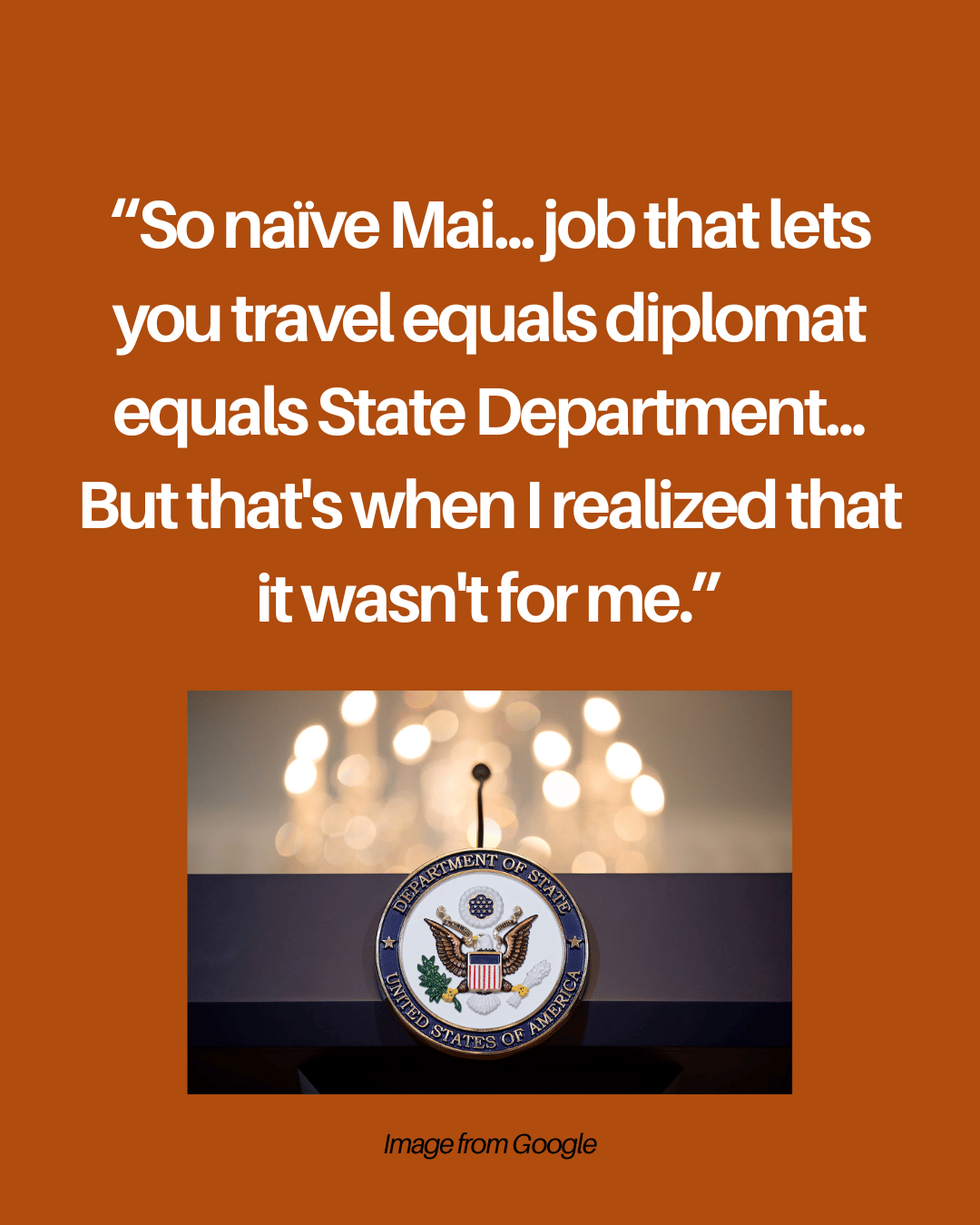
Sure. So I went to George Washington University in Washington DC for, I would say for three reasons. One, there was a YouTube video that said that freshmen students get free toilet paper, and I thought that was so cool. Number two, the population of Asian students was hitting eight to 10%, and that was really important to me because I grew up in Monument, Colorado where I was literally the only Asian girl in my grade. And then third, I just really wanted to get away from a landlocked state and DC felt like a very metropolitan international environment. And so I was really, really attracted to that. And I wanted to study international affairs mainly because I was looking up jobs that let you travel the world and diplomat came up, so I thought, okay, if I study something international, international relations, maybe that'll get me the ability to see more than the US.
Michelle:
So after school, after undergrad, I guess you went on to work for the State department. Okay. Talking about all this, right? Totally, yeah. Okay, go ahead. And then do you want to kind of walk through your career path?
Mai:
Yeah, so naive Mai, that just connected the dots in that simple way. I just explained job that lets you travel equals diplomat equals State Department. So in fact, all throughout my college career, I really did not feel attracted to or was really inherently good at the political science or history. And I just went along with it because I never thought to really explore different career paths. So I ended up at the State Department first as an intern and then I worked my butt off to get this very specially created position where it's my student status allowed me to somehow work as a civil servant there. And it was amazing. But that's when I realized that it wasn't for me, took a semester off of my senior year so that I could intern full-time at the State Department. I really wanted to give it my all and really figure out if that was the right fit. And it turned out it was not, but I was allowed to continue working there as a sort of student status civil servant. And so I went part-time to finish up undergrad while I continue work there and made money there. I literally, I feel like my earning peaked while I was in that role. I don't think I have made as much since then, which is so sad. But nonetheless, it wasn't for me. So I had my quarter life crisis and had to figure out what I truly wanted to do with my life professionally.
Michelle:
And then you went on after?
Mai:
Yep, I did. I was a news producer for a Japanese news agency that really helped me improve my honestly terrible Japanese skills because I never speak ever since leaving home. I never used it and I never used it in a professional setting, which is very different from speaking in your family. And then I eventually decided to transition into the environmental sector. So I've really been pursuing that and navigating that ever since, trying to build my credibility and expertise on environmental issues,
Michelle:
Right? And when Mai gives this kind of fast fact, I kind of feel like you need to also understand that it's not like she was like, okay, and so environmental things. And so the next year I have watched you over years work your way into different industries, different sectors, and especially the environmental one. And even into this PhD I've seen the path, and so it's many years. It's a lot of hustle. I definitely hear you on the money part and I definitely hear you on the, if Michelle could go back in time and take my old job back now, I would, do you know what I mean? Absolutely. I would even though, and I could still do what I'm doing, there's no conflict there, but I really feel kind of, I don't know if it's stupid or glad, I am grateful that, and I am sure you feel this way too, that you pushed yourself to do the things at the time that you wanted to do them. I just realize now looking back, I'm like, maybe I could have waited a year or two sometimes before jumping into the next thing, but…
Mai:
Oh yeah, totally.
Michelle:
That's okay. That's neither here nor there. We are here and that is in the past, so we can't change how that all happened. Let's start perhaps with your background with the Japanese language, since you mentioned that you really boosted your skills when you were working for the news company. I always saw you as someone kind of similar to me, maybe like family environment, family language, right, English learn through school and through social life and peers. It's the first time I'm actually hearing you talk about needing to improve your Japanese. So can you talk a little bit about that?
Mai:
Yeah, so I think like you I grew up in a non-English speaking home environment. And not only that, first 10 years of my life, I was in Torrance, California, which is known for its Asian population. And so there's a lot of Japanese speakers there. And so even outside of public school, a lot of my closest friends were Japanese speaking, so I actually rarely ever had to use English except for that time from 9:00 AM to 3:00 PM and I also did not like reading when I was younger. So it was only until I moved to Colorado that I started to grasp the English language better, honestly. And then in Colorado, the opposite happened where I did not have anyone around me who speaks Japanese and there's not a Japanese community in the area I lived. So I became, so to speak, whitewashed. Surprisingly, a lot of the Asian American friends I made in undergrad would describe me as whitewashed, which was pretty surprising ‘cause I didn't notice that myself. And when I started working for the news company, I realized that I don't know how to answer a phone call professionally because usually it's just in Japanese, it's “moshi moshi”, which is like hello. And then I'd just be like, what's up? Which is not what you and Japanese is very, very hierarchical language. The way you speak it is very different depending on the level of respect that person deserves and expects. And so I had to practice answering the phone call with my boss because she was quite frankly embarrassed with me. And I totally understand that though. She wasn't humiliating me. It's the reality. I did not know how to speak Japanese and…
Michelle:
Well, I think it's about context, right? You did know it's just when you put your, even as a family language and bilingual speaker, you never got to develop these skills and this knowledge in this setting and how would you, right? And it's not just you, right? It's me. It's actually even the generation of my parents. It's a lot of different people who had to change their life situations at different times. And if you didn't happen to develop that language at that time for that situation, where would you practice it? Where would you train it, right?
Mai:
Yeah. And you know what? It's interesting in that I grew up watching a lot of Japanese TV shows and dramas because yay the internet. And also my grandparents would send me the HS tapes, and so I was used to hearing it, but it's so different when you have to say it yourself. So that took me by surprise. I thought I would assimilate into office culture in terms of language much faster than what actually took me.
Michelle:
I learned this while we were both in China, right? It's not exactly my language that might give me away. It's not exactly the, it's not the accent, it's not the words I'm choosing always. It could be, but it's also my nonverbals. It's my body behavior because I am so gesturey as this freaking us born person and I have this dance background that makes me very movement oriented. And those are elements of communication and interpersonal aspects that you don't think of because we think of language and we think of, okay, we have the language, got it, we got the grammar, we got the vocabulary, we have all this stuff that these tools that we need. And it's like, no, no, no. There's behavioral stuff involved as well. There's the way that you say things and this how you say it and how you're presenting. And especially if we look at gender roles and we look at cultural expectations on that. Tell me if you've experienced this type of stuff too.
Mai:
Oh yeah. I would say my extended family picks up on it in terms of humor, American humor,
I mean, there's many different flavors, but I really do like being sarcastic at times, and it doesn't quite work in Japanese culture. They have their own version, but it's a bit more passive. You should probably not do it to your elders. And I tend to crash those barriers, I suppose, and I can say sarcastic things that they laugh at because they notice it's comedic, but then later I find out that they were really insulted by it. So that's happened before. And in general, yeah, I would say I'm a lot more gregarious than a typical, I suppose gregarious. This is the key though, gregarious to people who are still strangers and older than me. I think you're supposed to behave a lot more, especially as a woman, not subservient, but docile until you get to know each other more. But I'm outwardly quite, I don't know. I do really appreciate this American characteristic or stereotype or being friendly and open and talkative. Yeah, I do all that.
Michelle:
Can you talk a little bit about the transition from California to Colorado also because that was also a difference not only in language, but you mentioned being the only Asian kid on the block or in the school or
Mai:
Very little.
Michelle:
That must have been rough. I think.
Mai:
Yeah, at first I liked the novelty and then it got annoying because I felt like I was a diplomat for Japan. And even beyond that, just Asia, I felt like I had to be portraying Asian people at their very best because I knew that, okay, these my peers, this is like their one and only chance to be interacting with someone Asian, an Asian person, Asian culture, Asian language. I wanted to make sure that they would get excited by Asian things, and that was a lot of pressure that I was putting on myself. And it was annoying in the sense that I could no longer assume they would understand the cultural nuances. And when I mean culture, it also means food. For example, bringing fish as a school lunch is normal or so I thought until I realized no, they had never eaten fish in their lives and they thought it smelled terrible and they were questioning what the heck this white blobby thing is, and that's humiliating, but also offensive, and I just did not have the energy to stand up for the delicious qualities of fish. As a 10-year-old.
Michelle:
How did you handle that? There's no right answer, right? But I'm just curious to know also if your parents played a role. How did you manage the difficulties presented there?
Mai:
I did not. I definitely, whitewashed is a accurate term because I did not really want to bring attention to the asianness of me, and so I did not talk about really, I never talked about my family history or anything related to Japan or my Japanese heritage. So my friends, even though some of my childhood friends I'm still close to from Colorado, they don't know much about my background. They've started to learn more as adults as I've started to open up about it. When I visited this past fall, one of my close friends, she actually opened up about how she was so appalled with herself for not understanding as a high school senior why I was talking about looking at the population of Asian students or the colleges I was looking at at that time. She said, why does Mai care about that? That is so weird. What is this weird Asian pride she's showing? And then now she realizes that was so ignorant of her because of course there's a sense of community desire from people who have that sort of shared language culture history. I never knew she felt that way back then or how she feels now about it.
I appreciated that. I really did.
Michelle:
How did your parents see you during this time? Were they aware that you were going through this?
Mai:
No, definitely not. No. Maybe this is a typical classic Asian thing. I dunno, but we don't talk about our feelings too much actually. Never. Unless it's at a peak, then it just explodes. No, they did not. But it also wasn't to the point for me at least, where it was influencing my everyday life. This is something I reflect on and it's something that makes me think, oh, that definitely had hand in shaping who I am now. But no, I never also, I did not want to burden them with that because I knew it was tough for them as immigrants who have moved from California where they had such a strong community to monument Colorado where they truly had no one else but our immediate family, I became a better student because I did not want to burden them honestly. I started getting good grades in school because I didn't want them going to parent teacher conferences where they'd have to speak English and they're very, to me, embarrassingly terrible English. So no, I never did open up about these things.
Michelle:
And from our conversations privately as friends have an image of your family that is definitely different from mine, but can you kind of walk through their path to the US and those experiences and with English, and then obviously this is probably going to go into some childhood stuff, but this sort of family history that got you guys to here.
Mai:
Yeah, so my parents don't talk about themselves too much, so I am still piecing together that story as well. But let me do my best to try to explain how they arrived to the US. Dad, well, to start, they both appear to have been pretty well off. So there's that trickle down effect did not happen. I can tell you where's the money? So both of them lived well off, but it seems their parents, they did not have a good upbringing in the sense of having loving parents in a traditional way. I think in each of their own ways, they felt suffocated. For my dad, he got into, I'm just going to say finance sector, I don't really know, but I think he hated it, hated it so much, and he's kind of a weirdo to begin with that he decided I'm moving somewhere that is all about freedom and liberty, AKA, the USA, he had no plan. He started working at a jewelry shop in New York City. Meanwhile, my mom was diligently pursuing culinary arts, so she really wanted to cook for a living, and that got derailed when her evil stepmom told her that she needed to move to New York City and live with family friends as an au pair of sorts.
And my mom was extremely obedient for some reason, and she did not want to, she spoke no English, but she did it and she moved to New York City, lived with, I have no idea who, and started to learn English and started working at the jewelry shop where my parents met. Yes,
Michelle:
That's so cute.
Mai:
Oh my gosh. No.
Michelle:
Yeah, it is it, okay, well, I think it is,
Mai:
Maybe there's a little bit of a meat cute there
Because my mom wanted to cook for a living. My parents decided that she would have a much better chance in LA where there is a strong Japanese community, so that's why they moved to LA and they had some failed entrepreneurial ventures where they tried to start their own bento shop and I guess it went down, but I think it's cute that they tried and then they started working at a Japanese restaurant together. So she was in the kitchen, he was a server, and they started to make a life in Los Angeles.
Michelle:
Can you talk about the stereotypes that you experienced coming, being their daughter, being the, of course you were going through your own things in school, but were there, and I don't dunno if this is California or Colorado, but were there stereotypes presented to you? Just assumptions, maybe not necessarily stereotypes, but did people assume certain things about you and your family background and your unit?
Mai:
I think interestingly, okay, this is such an interesting question to me because in Colorado there weren't that many assumptions, primarily because I think one, the internet was still a fledgling thing, so people in monument were fairly cloistered, which means there weren't many stereotypes they even knew to apply to me.
Michelle:
Interesting. Yeah,
Mai:
Right. Yeah. Now that I think about it, I think it'd be very different now, but back then I didn't feel like I was constantly being stereotyped. There was ignorance. Obviously they knew so little about Japanese or East Asian culture, but I could sympathize with their ignorance because I knew why a lot of them have never left the country, let alone the state. We can go to this later in this conversation, but I feel a lot more stereotyping now as an educated, unfortunately maybe Ivy League educated Asian American.
Michelle:
That is interesting because it really shows how much, I think you mentioned internet, right? I wonder sometimes the influence of media, the influence of technology, the influence of whatever you see online, and it's great for exposure, but it also exposes, so for instance, people who are initially, and this is more philosophical question, how good or bad are people at their core? Do we have inherent evil or not? I wonder sometimes because we can't expect everyone to be traveling everywhere. We can't expect that people have the means to do that or to integrate communities across the world just at this present moment that I find it to be impossible. However, how much of the stereotypes that have been built simply through the overconsumption of the online world and whatever you see, and of course if we add in algorithms and we add in kind of cultural history, I just say this obviously because I've lived certain things in certain places of the world that show me that media can play a huge role. And it's interesting because talking from a time where it hadn't developed to where it is today, and so
Mai:
Localism wasn't a thing either. The people weren't as focused on that, and again, there was no diversity in the community either.
Michelle:
Can we go into why in the beginning you said that you identify as Japanese-American, but also Asian-American?
Mai:
Yeah, I think it's because I, so yes, being Japanese American is really specific with, it's a subcategory of this umbrella of Asian, but I have a lot of Asian pride in general because there's so much stereotyping and this very different type of racism that happens, that Asians experience, and I think there's a lot of progress that we need to make on that front, and I've always cared. As frustrating as it is to work on issues of diversity, equity, inclusion, I still really care about it and it makes no sense for me to be, I guess pushing specifically for Japanese American rights or whatever it is. To me, it's a very much a collective effort for the Asian community and by the Asian community to really push for advancements. I'm just saying that in a very general term, and I also feel a lot of pride when I see any type of Asian win, any type of award, honestly, and I'm not talking awards that are academic or intellectual here and all the other sectors, any sort of leadership position, it makes me very excited because there's a bamboo ceiling, so to speak.
Michelle:
Did your parents ever push you to do the Ivy stuff or was that because you wanted to alleviate them of that burden?
Mai:
My parents did not push me because they had pushy parents is my, yes. That's my theory.
Michelle:
So
Mai:
Yeah, so that's one stereotype that doesn't apply to me very well because I don't have the typical tiger mom, tiger dad experience. In fact, I craved it a lot more. I wish they were more disciplinary, but at the same time they were not because they knew me very well and I am very do, what is that thing that parents do reverse psychology. It's very effective on me. If you tell me to do something, I usually very much oppose it. I don't like being told what to do, so I think they also learned that for Mai to do what we want her to actually do, we need to not ask her to do it. Yeah.
Michelle:
Which is funny because you ended up doing, and I don't say this lightly, I only recently found out that you didn't have a tiger parent situation because even I as your friend for years was applying the stereotype on you because I saw you in the same category of Ivy educated Asian Americans, and that is when I found that out, it's like, wait, then you ended up choosing the thing that everyone is trying to get out of. Do you know what I, no one wants this. The amount of people who are like, yeah, I studied engineering or I went to medical school, but I just want to open a bakery. You know what I mean? The amount of people who are Asian American in this country, who, and here you are. Yeah, my rebellion was to do the exact same thing. It's so funny.
Mai:
It's so true. I cannot explain to you why I ended up where I am because it definitely was not motivated by my parents. They're often, well, they have two concerns for me, usually if my dad is, are you having enough fun? Don't forget, there's more to life than studying. Do that. I know. And then my mom is my get out of school. You are an adult. You need to make money. What the heck are you doing? Your fun days are over.
Michelle:
Yeah, that's funny.
Mai:
You grow up.
Michelle:
Oh yeah. That's so funny because both of them, I think it's past reverse psychology now. They're just like enough, right? Yeah,
Mai:
Yeah, that's true.
Michelle:
Yeah. If it's too effective, God damnit. Yeah. Yeah. Well, I mean you are really impressive I think to the objectively on paper. That's why I think I wanted to take a moment and shine a proper light on the journey to a PhD. It's not that you are in a PhD and that's your crowning achievement. I actually look at everything before that as because this is the most recent piece of your background, your journey, and I feel like if we don't put it in the context of also how you got there and we don't look at all the things that you went through and how many times you always seemed really studious to me, actually way more than I ever was. I actually admired you a lot and you okay, just truth moment. You actually influenced me a lot in terms of modeling to me how to have fun and also work hard in school, even though we were only together for that super crazy period in China, searching for bakeries and getting lost on the metro, totally fine, but I really realized you were a good example for me. I had a lot of, in my world, you were either ultra academic studious or you were crazy and partying all the time, and I was in the crossroads trying to decide where I could be and there you were. Where were you rushing a sorority while also getting great grades and working for the State Department? I was like, I should be Mai, I really should. There was a moment I was like,
Mai:
no don't be Mai.
Michelle:
Yeah. So I want to focus on the role that language took. So we talked a little bit before about your journey with the Japanese language, so let's talk a little bit about English for you.
Mai:
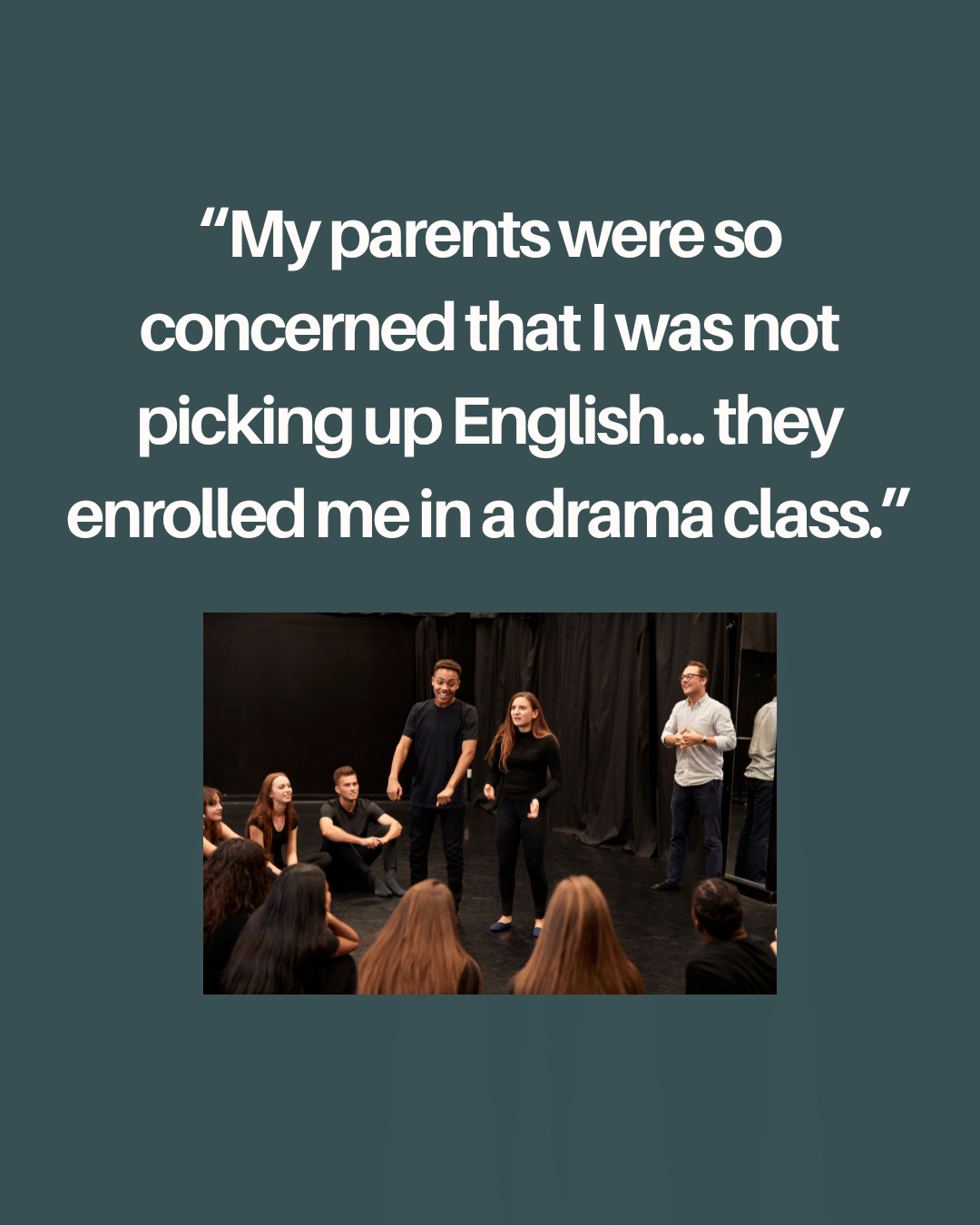
One before I go into that. Thank you Michelle for saying high praise about me. I actually think you're quite studious in the way you are always determined to achieve whatever you set out to do. So yeah, don't sell yourself short. They were amazing person with that said language. Yeah. My parents were so concerned that I was not picking up English, and actually I had to go to summer school. My English was so bad that they enrolled me in a drama class.
Michelle:
Oh,
Mai:
Yes. Because that forces you to memorize poetry, sing songs, and do plays. Right, and I fell in love with that. Really did. It taught me how to do English in a public speaking form and to be very expressive and it made me fall in love with poetry and that's how my English improved one.
Michelle:
This is when you went to, sorry, from California to Colorado?
Mai:
This was actually in California.
Mai:
I started in third grade, I believe after I got the notice that my English is honestly pretty bad, and so then my parents realized that they can't teach me English, but drama classes probably can. And so then I did that for three years until we moved to Colorado and then in Colorado I was pretty shy just feeling like the new kid and not really seeing familiar faces in terms of faces that looked like me, and so I shied away actually from drama or there's always the school play that you can try out for. That's one of my biggest regrets. I was too shy to apply for that. I just did not want any singular attention on me and school plays would do that. So regardless, I realized that a lot of more students there were reading books for fun, which was not the case in public school and where I was in California, so I started to read Harry Potter because that was the cool thing to do, and I can tell you that JK Rowling, Harry Potter really did start my academic journey because that's how I fell in love with books, and then I started voraciously reading a lot of preteen novels after that, so thank you Harry Potter, and that was really my gateway drug into the English language.
Michelle:
Yeah, I don't think that a lot of people realize how many, and when I say us, it's like a very broad term, us how many people who don't grow up in native English speaking households have to go through their own way of managing the language outside. True.
Mai:
Yeah. Yeah. Oh my gosh, a hundred percent.
Michelle:
Yeah. You never did ESL, right? You just did drama class?
Mai:
Yeah, just do drama class.
Michelle:
Yeah. Yeah. Recently I didn't even know. I have a cousin who was put in ESL and that's crazy. He's the youngest cousin I have in the family, and I was obviously very much alive and conscious and watching his growth and development, I had no idea he was put in ESL as a kid. And that I think just also goes to show the blindness that you can have when you think that it's your own personal experience and you're like, okay, it must just be me. It must be that I have a problem or I have more difficulties. Why are other people not having to do this? I realize there's more people than we realize who go through this, and it may not always be ESL, maybe drama class. It may be, for me, it was definitely a lot of sports related stuff, but we're actually managing a very similar challenge just in different ways
Mai:
And small talk. It took me forever to figure that out or dinner table talk in English. I'm still learning that honestly to socialize and have a group conversation because I think that's something you learn at the dinner table in an English speaking home, which I never had, never had because it was in Japanese one, and because family is Japanese and therefore actually dinner table talk is not that robust. How is well day? Great. Let me tell you one story and then it's like that was nice. Yeah. I mean, I'm not to say that all Japanese or Asian families have boring dinner table talk, but that was the case for my family.
Michelle:
Yeah. Yeah. I'm reminded of a question I keep forgetting to ask on other episodes with other guests, but do you feel like you have a different personality in the different languages? I should also mention that you and I met because it was a Chinese language, like a Mandarin program. So at one point you were quite okay with Mandarin as well as Japanese as well as English. Also, I know currently you're studying Spanish. At one point you were also studying Indonesian. I remember that. Okay, so I wanted to ask you, do you feel like when you change a language, you change your personality?
Mai:
Oh, with Spanish, Chinese and Indonesian. I never got, well Spanish, I'm still working on this. I'm not going to say I've given up on it, but with Chinese and Indonesian, I never got good enough to where I could develop a sort of, what would you call it, personality around that with Japanese, definitely. I am different when I speak Japanese, and it's a part of me that I really miss because it never gets to come out because I don't have Japanese speaking friends and I don't talk with my family that much. So yeah, it's really unfortunate. That's why I like traveling to Japan. It comes out and it's a part of me. I'm like, oh, nice to see you Mai, I like this part of you that's been hit all along and it's so liberating.
Michelle:
Yeah. Can we talk a little bit about your sister?
Mai:
Oh, yeah.
Michelle:
Yeah. And whether or not,
Mai:
I'm not on talking terms right now.
Michelle:
Oh, no.
Mai:
Upset at her, but I'm happy to talk about her.
Michelle:
Yeah. I'm wondering if she had a similar experience to you
Mai:
Don't know. I think
Michelle:
So. I know she worked in Japan a bit
Michelle:
As well.
Mai:
She's still there.
Michelle:
Okay. Yeah.
Mai:
I would be curious as to whether she felt as much of this, what would you call it, a cultural distinction while in Colorado, because she was younger, she was about seven years old when we moved to Colorado, so third grade, to give you some context, however, I think she feels it a lot more now living in Japan. She uses an American name. She uses the word Annabelle for on her business card and how she wants her colleagues to refer her to as, because when her name, she looks Japanese, and if her name is fully Japanese, people will place Japanese standards on her, and she is culturally American, and that gives her some additional protections or work-life balance. So she goes by Annabelle, which to me is crazy. The level of the differences in this case, I guess, bad differences.
Michelle:
That was very recent. Right? So she chose this name a few years back.
Mai:
Yeah, a few years back. Very strategically. And I get why.
Michelle:
Yeah. Yeah. I think I can see the logic behind it, right? It's kind of like you don't want to be misrepresented or kind of have the awkwardness that comes with, I blend right in, but I'm not like you guys. Right?
Mai:
And the way she speaks, probably the use of the Japanese language is also going to be different. And she needs to, without always explaining herself, the name will imply that is the reason why.
Michelle:
Right. Do you guys have, okay, well, you guys are not talking currently. Do you ever have conversations about this? Do you ever talk about the individual struggles you each had, or obviously she changed her name, so that came up, right? Yeah.
Mai:
It has come up in terms of not so much language acquisition, but more so just cultural differences in terms of how to make friends, for example. And the challenges with that, if you live in a different place, has a different set of norms for how to develop social relations. And so in Japan, it's actually very hard. It's easy to get to an acquaintance level, but you have to be, I don't really know what the formula is, but there's a lot more hurdles that you have to get over in order to be considered a close friend. So to deepen relations is very time consuming in Japan, I think. Very slow, maybe not time consuming, just slow.
Michelle:
Yeah. Her Japanese, because she's working there, did she have chances to develop it more or did she develop it on the job? I guess
Mai:
She did develop it on the job. However, she also finds it exhausting to have to go through that. And so I think it's up to you whether or not you want to put in the effort and time.
Michelle:
I have a question on the list about whether or not you've experienced jealousy around your skills with language, with being able to navigate different cultures even
Mai:
With language. I think Japanese people tell me that they're always impressed with my language acquisition skills and how good I am at Japanese. But at the same time, I think there's a lot more to learn and I just don't think, I wish I could speak it better. I wish I knew more vocabulary, and that just takes determination and persistence to study that. And if you don't use it all the time, you lose it. And jealousy, I think in my language skills, I mean it doesn't come up that much honestly, unless it's with an American who is monolingual, then yes, definitely they say they wish they knew how to speak another language and that if they have kids and they definitely want them to be bilingual. So I've experienced that.
Michelle:
The reason I ask is also because you’ve traveled pretty extensively, and you've also kind of, from what I've observed, you can chameleon really well, even though sometimes you and I don't get the chance to blend in, you can be in certain parts of the world. I know recently you were in Ecuador and Guatemala, and so you don't get the chance to, or maybe you do actually. I haven't spent a lot of time there. But you can also pick up on these cues of what people are doing and how locals are behaving and kind of try to adapt to that. And I think that's what I've realized. People are more jealous of sometimes your ability to adapt rather than the actual ability to speak a different language.
Mai:
Yeah. You know what, being in Ecuador especially, it made me realize, yes, my Spanish is lacking. I definitely need to improve it. But above and beyond vocabulary, grammar and ability to speak fluently, you need to be able to, it comes down to this, the ability to have fun with each other and to relate in some way, whether it's that you care about the same things and can express that excitement together or make jokes that is so important. When I was in Ecuador, I was with this two people from a nonprofit that I'd like to someday partner with in my research. And we were answering questions that get to know each other questions that chat GPT created. And one of them was, what would your nickname be or your rap star name be? And they're all Spanish speakers, so they're giving their Spanish words, and I had to come up with something that I could explain and also something that's not boring.
This is supposed to be fun. And so I like soil health. I do, I'm studying soil ecology. They know this. I care about agroecology. So I said my name would be La Gusana, which means the worm, but feminine. And that was a total hit. I only needed to know the word worm and know how to conjugate it to a female version. And so it's witty, it's sharp. It totally reflects how I care about soil life. And that's something you have to, that's what I call more engaged learning, I suppose, or that's the kind of Spanish I want to be able to pull up.
And that doesn't require a lot of Spanish speaking skills.
Michelle:
It's funny, and you even mentioned monolinguals wanting, and I see it too in all the people I know, like, oh my God, we've made kids and now they're going to be sent into all these different types of programs to expose them to different languages. And I just, not just the mission of the company or the podcast or anything. It's kind of like, well, don't forget, there are a lot of other elements that come in when you are talking and interacting that actually don't depend on language words, grammar, vocabulary. People are still behind this. So if somebody is not going to want to talk to you because they have some sort of preconceived notion about you, or they're walking in with those prejudgments, they're not going to relate to you. Even if you're a fluent native sounding speaker, you can perfect your accent all you want. Right? It's still going to depend on that. Yeah.
Mai:
Oh yeah. They even told me that they were really worried that they had a preconceived notion that I would be a very uptight elitist cornellian coming in to bring down the fun. And because, yeah, I was intruding on one of the projects they were doing, and they were really worried, honestly that I would be a very boring
Michelle:
Academic basically. Right, exactly.
Mai:
Yeah, exactly. And so they really appreciated the fact that I actually had really bad Spanish, but I was still trying to use it and they would encourage me to use it. And it's really embarrassing to use Spanish at my level ‘cause it’s really bad, and I know it, but nonetheless, I stepped up to the challenge and spoke terrible Spanish. And it just like showing that you're trying and not trying to impress them necessarily, just like that earnestness is really important.
Michelle:
I'm just thinking about the ways that you have gone in and out of language learning. I'm wondering if we can talk a little bit about your experiences. You learned it. So we kind of take it out of the family environment and we look at the academic and institutional stuff. I think you probably had to learn a foreign language in school. You learned Spanish maybe, or in middle or high school.
Mai:
I took Spanish in high school and learned nothing. And yes, I studied Chinese in undergrad. That was actually, I mean, there are constraints in learning it in academic in a school setting, but it was much better. But I've also done immersion programs now, both remote and in country, and had a little bit of one-on-one tutoring before as well. So I've come to realize that it depends on how you need and want to use the language that should determine how you learn the language. So for me, with Spanish, I need to be able to develop relationships, have good interactions, be able to ask questions back when they say things, not as much about talking about my thoughts and ideas. So to be an engaged listener and to be able to interact. So with that said, school setting, not very helpful because they focus a lot on grammar and writing,
And I want to practice speaking. So for that, I found individual one-on-one learning to be really, really helpful and for me to have a say in the milestones that we're working towards, because in a class, there's just set curriculum and goals that need to be achieved. With that said, a group learning can be nice as long as it's not too big. And I have liked being in a group learning what's really nice that you can get from one-on-one also is the off the cuff talking. So you get a prompt and you just start talking as opposed to fill in the blanks and using a set of words. And the less structure actually the better, because you're really forced to come up with anything that comes to mind and piece it together on the fly. And that's really hard,
Michelle:
But that's more representative of real life. Right?
Mai:
Exactly. And writing is, to me, I found it to be helpful only. So in, I guess embedding some of the grammar structures and rules, you do take time more so you recognize when to put what pieces together of different grammatical components.
Michelle:
Is there something that bothers you a lot about the way that people approach the conceptualization of language learning? Feels like your experiences are way deeper than the average person with languages.
Sometimes there's a gap, right?
Mai:
Yeah. It's really hard to pinpoint exactly what it is, but it's Duolingo. I mean, I tried using Duolingo, and it's good as the pre-gaming to the actual starting of the learning. It's the pre-game that is not how you actually learn the language though, in a way where you actually probably want to use it, but what the gap is, is maybe you can tell me what it is, but it's probably the fact that learning, okay, it's something about this for me at least. Sure, you can learn a ton of vocabulary and vocabulary is so important. I recognize that, but that's not enough to actually piece it together to express your points or to ask questions and have a natural dialogue. And that really comes from, I think it's the pressure and the situation to start to do that, which a workbook a Duolingo is just never going to give you. You have all the time in the world to answer and to think about how to answer.
Michelle:
It kind of seems to me that people think if you pay for an app like an out of the box, not out of the box, what am I off the shelf solution that it's supposed to work, you pay 70, $80 for this app, therefore transformation. And it's like, I am confused because I actually don't think Duolingo actually markets that. I think that they say you could learn a new language this year with Duolingo. Okay, maybe that's a little bit confusing. But I guess it comes from, personally, I've always kind of known it takes a lot more than just an app to learn a language. It also depends on each individual person, what you need, and you just said it best, how you approach which tools you use should also be dependent on why you need them. You need to speak for work. Okay, probably go find things that are specific for your goals.
I think that's where it comes in that I see there is something that's missed. And obviously the company's probably pretty happy that a lot of people are missing this and paying for pro subscriptions. It's great for their bottom line, but there is a lot of this, I call it either the infinite cycle or the never ending cycle of running around to find the best tool, best method, best whatever. And then basically when you can buy it and it's off the shelf, people tend to do that a lot. We see it a lot with other industries too, like fitness, diet, exercise programs, anything that's you say, I just need to pay and I'll get results. Great. Okay. Right. I'm going to do it.
Mai:
Oh, for sure. Yeah.
Michelle:
Yeah. I think that's like, it's the cringe for me for that. It's like, no, no. Can we jump back to the stereotypes that you feel because you didn't feel them before in Colorado, or at least not in the way that you feel them now. What would you say are the kind of new things entering your life now that you are this double mastered, ivy educated? We didn't share your whole cv, but Yeah.
Mai:
Yeah, you actually brought it up in the very beginning in that it took a lot of hard work to get those accolades. And so I personally am very proud of it. Not for the name so much as all the sweat equity I put into getting, earning those claims, but the hard work is not shown in that necessarily. More so it's the privilege and elitism and for whatever reason, the socioeconomic status that's assumed with it. So I do feel like whether it's my peers or our professors, I think they assumed that I grew up relatively privileged, and I will say yes, privileged in a lot of ways. I was never in abject poverty, and I had a stable family structure overall, and I did feel like I was loved, even if we never said it, the L word, that is not something you say to your family. No, no, no.
But that's really hard because I worked so hard and I feel like I worked so hard to get here, and it's just all assumed that it was a path that was set forward for me already. I was destined to get here, and that's really not the case. That's not how I see it. And so that's the dissonance that I feel, and I'm not always going to bring it up, all the trials and tribulation. So I really appreciate that you know my backstory, and it's not a backstory, that's really, I don't know. I also don't know the backstory of all of my peers, but I think more so than race, there's a class distinction that we don't talk about because race does gets elevated and race is a really big problem in the US. However, a lot of the people who are able to do what I have done usually have gotten a lot of financial support related to or other types of support from being surrounded in a community that's educated and cares about their education.
Michelle:
It actually echoes what I felt when I went into my PhD, which just, and we're going to end there, but there were so many assumptions made because I am Asian American because I'm a female, but also, oh, that
Mai:
Too Asian
Michelle:
American, right? Yes,
Mai:
Exactly. Yeah.
Michelle:
It's the fact that East Asian American, east Asian American, yeah, in a hard science, in biological neuroscience, working in a lab. There was a lot that went on there. And also how I was treated, I won't say the name of the institution I was at, but how I was treated, even from the staff and the security guards and whoever, if they heard me speaking Mandarin, because occasionally we would have visiting researchers. I needed to do, of course, unpaid translation for and cultural liaison work for,
And how I was treated literally as if I don't speak English. And then just flipping in English and be like, what's going on here? And then being like, oh. And then thinking, of course. And you feel it. You feel what's applied to you. It is definitely beyond race. It definitely goes into class. It goes into all of these shortcut assumptions that people kind of wrap together, throw in one bundle your direction, and you're like, that is absolutely not, because if anybody, and you understood, actually you completely, I could echo the same thing back to you. My backstory, you know what I've gone through, the challenges I did not start or was even good at, and what does that mean? Being good at something. But I did not have that support to go and even develop a love of the sciences and work really hard because I decided it was something I wanted to do, and it was out of the personal determination, not because it was already pre-made. Right. And I think that's so frustrating for me to hear not only because of what I've lived, but because I've watched you, but also how dare people just literally judge a book by its cover, right? It's really confusing. I don't think you apply that to anyone. You might meet someone else, and correct me if I'm wrong, you aren't out there placing these prejudged assumptions, stereotypes on other people that you meet at first glance.
Mai:
Yeah. I try not to. And to tie it back to language, I think why I'm not decent at learning new languages is not just language as in, what would you call it? Just what you think about Japanese, Indonesian, whatever. It's more, and I think you can relate to this because I've had to switch focus areas, study areas, just disciplines so many times, and each discipline has its own language. The sciences, biology, the social sciences, anthropology, political science, onset of languages of different types of words. It say the same thing. And that requires that sort of learning of a new language over and over again in the culture associated with the assumptions and norms and value systems. So having had to do that so many times lets me code switch, or I guess strengthen my ability to code switch,
Michelle:
And it's kind of like transferable skills just in a different setting. Does it bother you when people say, oh, ma, you're so good at learning new languages. You're just good at that, right?
Mai:
Oh, yeah. Oh,
Michelle:
So triggering.
Mai:
It really is not even new languages, just to say that. Yeah, you've always been good at school or to people think that I was always a good student, and that blows my mind because actually I was not, I don't, well, I suppose it depends. It's all relative, but undergrad, sure. My GPA was okay, but I was not obsessing or excited about different political theories. I just studied my butt off the night before usually, and I pulled all-nighters, always right before deadlines. I did not learn for the sake of learning. I was not a good student. I just knew how to get good grades. I think now I'm a good student. I really do care about the content and the concepts, but I'm not a good student. I did not know how to be a good student. I didn't know what it means to be a student and the value of learning, honestly, until this PhD, because even grad school, my objective was to go out, back out into the professional world and develop hard skills. So learning is a skill of itself
Michelle:
And learning how you learn, right? Not learning as this abstract concept that's equally applied all across the board. Yeah.
Mai:
Oh, for sure. Yeah.
Michelle:
I've always been a really direct and overly honest, overly authentic, perhaps sometimes communicator. And I would say things like, oh God, I did so bad on that chem exam. Yeah, I failed it. Of course, I did bad. That was the honest truth. Come to find out a year or two later, this is back in undergrad, that people thought I was one of those like, oh, I did so bad, but actually I'm the reason that the professor won't give a curve. They literally put that on me, and I was like, do you want to see my grades? Do you want to see my, I don't. I was a gymnast up until that point. I had no idea how to study. Why the hell would I know? Where would I have learned all this? Right?
Mai:
It wasn't geometry.
Michelle:
I know. Oh my God, screw all that. Right? And this was pre-internet being developed to a way YouTube had just barely come out as a concept. No, I did not have YouTube tutorials. Later on when I went back for my master's, I actually had a much easier time because I had so many more resources available. Oh, Khan Academy. Oh, Coursera,
Mai:
Dr. YouTube, thank you so much.
Michelle:
Yeah. Let's look at the future. I always like to end on a try to end on a positive note. It doesn't always work, but let's look at the future. Have you try to integrate your prior experience in the geopolitical international affairs side of things, your personal experiences with culture, language, and communication, and also a little bit you know of what more technically with the field of research that you're in now, where do you think we're going in terms of a global society in terms of communication? In terms of learning? It's a very open question. Feel free to answer however you want.
Mai:
Well, I, I've been a teaching assistant this semester, and I can tell you that the AI derived tools have been a game changer for learning good and bad. It's really helpful for you to be able to validate the concepts and for you to further deepen and improve. However, currently, a lot of students, undergraduate students who are still trying to figure out how they learn and what to learn and the ways to learn, they're using it as crutch, and they don't try for themselves first. I think a tool like ChatGPT can help you get better, but you have to first have a foundational knowledge to know when the tool is not delivering the depth or honestly the quality or correct answers that you need. So I mean, I've gotten papers that were fully written by ChatGPT by my undergrad students, and this is supposedly an IVY institution.
So they should technically be smart enough to do these assignments themselves and they're not, and they've been using it to take in class exams and those that has happened too. So where is learning going? I think the online tools are going to reduce critical thinking. So it's going to be the burden of educators to figure out ways so that AI tools can be additive instead of reductive. And I think there are ways, so educators need to be up to speed with these digital tools so they can be ahead of it and know how to teach students how to use it so that it's actually beneficial for them. So I'm both optimistic and concerned because I think critical thinking is already so weak and it's going to further be eroded by how easy it is to get away without doing that. But at the same time, I really appreciate these new tools that are coming up because even for Spanish that I'm learning it, I haven't tested it yet, but I'm sure it can help me improve some of my dialogue and correct some of the issues that I have that I'm not catching. Unless you have something that is like a one-on-one tutoring session or more like a customized learning, then the services you offer Michelle, I think are really nice in that it can pinpoint exactly what you keep messing up that many teachers will overlook because it's just so specific to you that they don't have time for it. But I think these tools can also help with that when you're not in the session with your teacher.
Michelle:
Yeah, I always tell clients that they should not be just working with me. I actually, no, and not even tell them. We have a whole kind of onboarding and it's like, here are the expectations. And I reiterate over and over probably again too much, but they're told it's in writing, it's on a video, it's with me live. I'm like, this is not sufficient. Do not rely on this. I expect you to be doing things outside of our live working time. Even if we're meeting each week, you cannot put all of your learning into our one hour together. Our one hour together is a planned, trained, or it's a training to help you target specific things. The same way you go to a gym and you work with a personal trainer, but you cannot be expecting anything if you are not. You are totally passive living life and you show up and you join a Zoom meeting, you're like, okay, let's go.
Right. So yeah, these are great tools. I agree. I think it's a little bit challenging for everyone to not love hate technology. It's been so many years, it's just AI is literal. It doesn't shock me to hear that students have given you completely AI generated tools, the tools, assignments from these tools. I feel that it's the natural expectation and it's on institutions, and I don't know if it's on the educator themselves. I think that it's, most people are definitely taxed, right on that professional side, but to find ways to control against this. But you know how it's like you can't be relying on these tools. You must, so my point is schools adopted before just the difference is they never had a tool this powerful to come up against. We did work really hard against plagiarism when computers started coming out and people had to submit online assignments, and obviously there are all these checks like ID checks when you take exams. I don't have an answer, but I'm thinking it's again, the next iteration of that.
Mai:
Oh yeah, I'm all for learning how to live with it coexistence, because you can't tell them not to use it, but it's more integrating it into the assignments themselves. So maybe for example, a literature review, lot of that seeing a, most students use ChatGPT to help them write it, which is okay, but I think next time what would be better is if we ask them explicitly to just use ChatGPT first, turn that in. The next assignment would be one where we ask them to use that as reference to write something themselves or to critique what might have been missing from each of the summaries that ChatGPT made for each of the papers, for example. So I think there's ways to work with it.
Michelle:
Well, thank you. Thank you for spending a nice chunk of your Sunday morning with me.
Mai:
Lovely.
Michelle:
No, I know it's not easy to number one, just ‘cause you're my friend. Doesn't mean you have to say yes to things I ask you. Right. But number two, I think these topics are, the reason I asked you to be on the podcast is because we've had a number of conversations on all these topics separately, but I also know that you're someone who has really, really thought about them because just being Asian American or a person of color or a multilingual person does not mean that you've actually spent the time to personally self-reflect, and I know you've done that. I really appreciate you sharing about your background, your life history. It's personal. So thank you for being here today.
Mai:
No, thank you for giving me the space to reflect on my past and where I am today, and it's been really nice because I actually feel really proud of myself through this. And you ask really provocative question that make me think about my opinions on language learning and the role of culture in that and how they're so language is part of human culture or community culture. Yeah. Thanks Michelle. I am so excited to see where this goes. I know this will probably get cut. We can meet at the restaurant. Yeah. Okay, great. Ned, we're just talking about her engagement plan now. We're just I know, I know.
Michelle (outro):
Yeah. We ended up meeting up in person a few weeks after we recorded, so that was us arranging the time that we were actually going to meet. Very cool that our husbands also got to meet for the first time as well that time. So take the opportunities to organize when you can. Even if it means at the end of a podcast recording, I really, really hope you enjoyed this conversation as much as I have really had the honor of having such great friends, such great people in my life. These are conversations that we just have normally. But I think putting it into this podcast space allows us to capture where we are in that moment. I mean, a year and a half ago when we were recording, I was at the very beginning of this. I had no idea where things were going to go.
And not only do I have more of a sense of where we cultivate is going, I also feel like these have been great opportunities for me to continue the conversation with my guests, with the people who are in my life. Many guests have become friends by the way. This is so podcast episodes. Really, they're not just recordings that we wanted to put on because two people care. I feel like they're meant to lead to so much more, and I really do hope that in the future we'll continue growing. Whatever this project looks like. I really, really hope that you are telling friends, family, whoever about this show because part of why the work has now expanded to podcast slash substack slash anything else, any guest appearance that I have made. By the way, if you haven't heard my recent interview with Jovana on her podcast, go to my bio on the site.
I've put it there. It walks through kind of my early life and my language background and a lot of things that I actually don't talk about because most of the time I'm concerned with spotlighting our guests. But if you really, really enjoy these conversations that have been happening and you want to hear more, please, please just tell more people about us. Tell more people about the work that we're doing, have people follow us, but also write a review if you can, because this is what boosts discovery. This is what's going to allow us to get in front of the people who want to be having these conversations as well. So while this month was dedicated to heritage language and heritage language speaker experiences to kind of spotlight them, this is not the only time that we'll be talking about heritage language. This is kind of the same thing I feel with heritage months, right?
So I mentioned that it's A-A-N-H-P-I month. Yeah, sorry, there's lots of letters now in this acronym that just keeps getting longer. I'll post some links, by the way, about this whole thing, and maybe in the future, maybe next year we'll do a whole episode on how these groups were even put together. And there's a lot of preparation that's going to have to go into that because it's a big topic, like all the things we do here. If you haven't looked at our substack yet, make sure that you catch our new series called Inherited Interrupted. It's a mix of pieces that I've written and guest pieces kind of showcasing the diversity of experiences being a heritage language speaker, heritage language already as a category, and heritage language learning and heritage language acquisition, and all of this stuff is already overlooked enough. But on top of that, we forget the individual aspect and the spectrum of experiences when we think about categories. This is a series that will actually run for as long as possible. So we're kicking it off on Substack this may, but truly this is meant to go on. But until it doesn't, honestly, that's kind of what I want to show. I want to show how many different people have lived, how many different types of things. And when we say something like, I'm a heritage speaker, for example, a Mandarin, what does that even look like? What does that mean? That doesn't mean anything. You have to hear more about each person to know more about what it's been like for them. And if you follow the show enough, you get what I'm doing here. We're always focusing on individual experiences because they shape so much of our understanding of the global picture. So thank you so much for joining me today. I will see you in the next episode. Check out our show notes and more on the main site WeCultivate.world/podcast.